



Commercial Garage Equipment, Diagnostics, Garage Advice, Tyre Bay Direct, Tyre Pressure Monitoring Systems
The Complete Garage Guide to TPMS Servicing & Diagnostics
Tyre Pressure Monitoring Systems (TPMS) have transformed from a high-end luxury vehicle option into a standard, legally mandated safety component across the global automotive market. For modern tyre bays and independent repair workshops, TPMS represents both a technical responsibility and one of the highest-margin service opportunities available on the shop floor.
Ignoring TPMS issues, turning away diagnostic warning lights, or failing to replace worn valve components during routine tyre replacement risks customer safety, leads to instant MOT failures, and surrenders revenue to regional competitors. This comprehensive guide covers the technical foundations of direct and indirect TPMS, statutory compliance requirements, sensor evolutionary tiers, valve servicing protocols, ECU relearn procedures, and workshop profit dynamics.
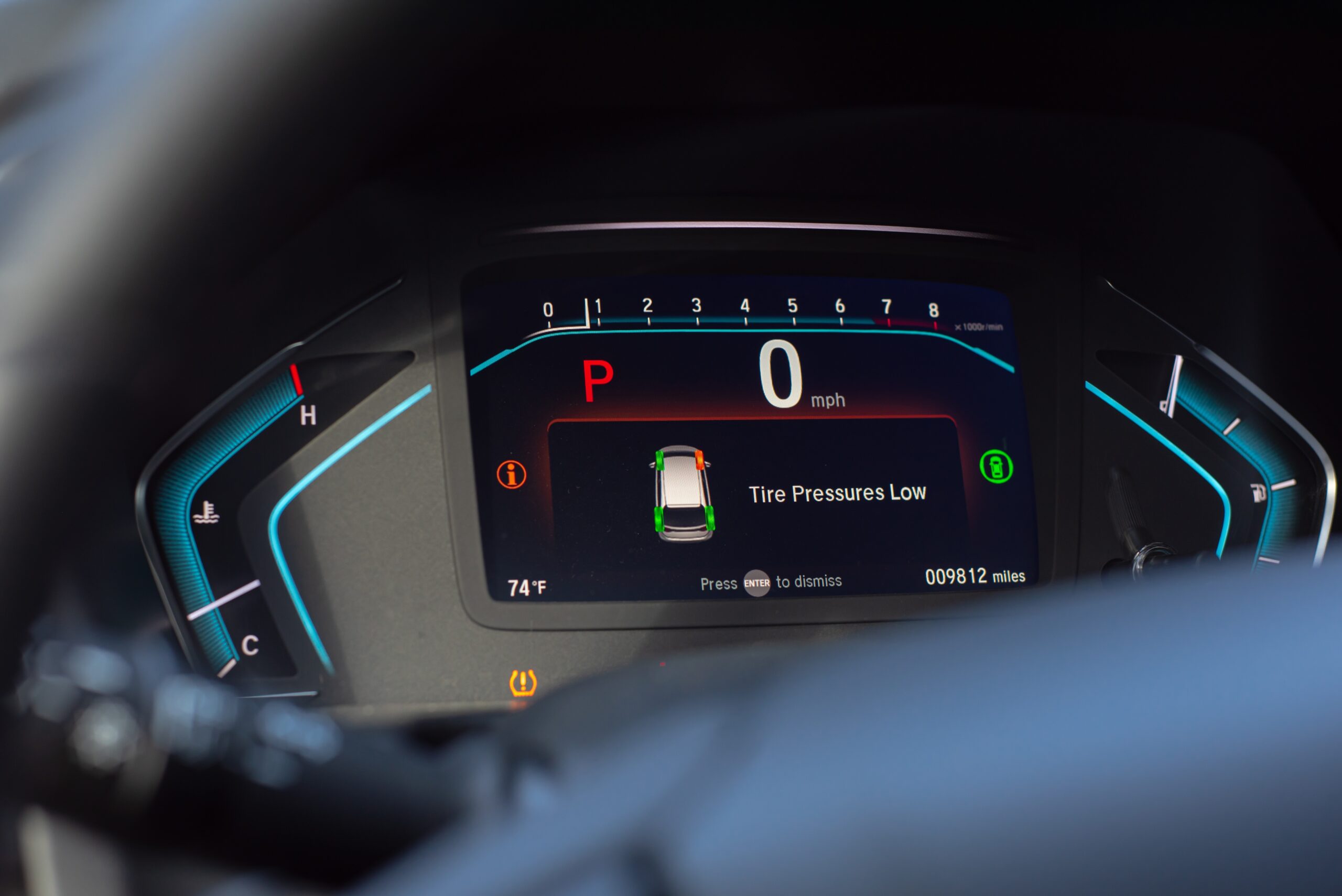
1. Statutory Compliance and the Legal Mandate
Understanding the regulatory history of TPMS explains why diagnostic requests have surged across independent garages over recent years.
The European Legislation Mandate
European directive UNECE R64 mandated that all category M1 vehicles (passenger cars up to 8 seats) homologated after November 2012—and all newly registered vehicles sold from November 2014 onward—must be equipped with an operational tyre pressure monitoring system. Following this surge, millions of vehicles fitted with first- and second-generation electronic valves entered the secondary service market.
The MOT Tester Framework
Under standard UK MOT testing guidelines, any vehicle first registered on or after 1 January 2012 that displays an illuminated TPMS warning light, a flashing diagnostic code, or a system failure message on the dashboard instrument cluster will receive an immediate MOT refusal (Major Defect).
| Compliance MOT TPMS Diagnostic Decision Path |
|
Initial Check
Vehicle Ignition ON |
||
| ⬇ | ||
|
Status Query
TPMS Warning Light Active? |
||
|
(YES) ↙
Result: Fail
Major MOT Defect Requires Repair & Diagnostic Clear |
↘ (NO)
Result: Pass
Pass Standard System OK |
|
Because internal lithium-ion batteries inside early wheel sensors typically feature a operational lifespan of 5 to 7 years (or roughly 100,000 miles), millions of vehicle batteries have depleted. Garages equipped with dedicated TPMS diagnostic and programming tools can resolve these failures instantly, keeping customer vehicles fully compliant.
2. Direct vs. Indirect TPMS Architectures
Not all pressure monitoring systems function in the same manner. Mechanics must differentiate between indirect and direct architectures when troubleshooting illuminated dashboard icons.
Indirect TPMS
Indirect systems do not use physical pressure sensors inside the wheel assembly. Instead, they rely on the vehicle’s Anti-Lock Braking System (ABS) and Electronic Stability Control (ESC) wheel speed sensors to track rotational velocity.
- Operating Principle: As a tyre loses air pressure, its overall rolling diameter decreases slightly. Consequently, an underinflated tyre must rotate at a higher frequency (RPM) than its properly inflated counterparts to cover the same distance. The ABS ECU detects this rotational imbalance and triggers the low-pressure dashboard warning.
- Limitations: Indirect systems cannot provide real-time pressure figures (PSI/Bar) or internal tyre temperatures. They are slow to react to gradual air loss and cannot detect equal pressure loss across all four wheels simultaneously.
Direct TPMS
Direct TPMS relies on dedicated electronic sensor bodies mounted inside each wheel assembly, physically attached to the bottom of the tyre valve stem.
- Operating Principle: Each sensor incorporates a piezo-resistive pressure transducer, a temperature sensor, a micro-controller, a battery, and a High-Frequency (HF) radio transmitter (operating at 433MHz in Europe or 315MHz in North America). The sensor takes real-time measurements directly inside the air cavity and wirelessly transmits precise pressure and temperature data to the central receiver or ECU.
- Advantages: Direct systems respond almost instantly to minute pressure drops, identify exact wheel locations, detect slow leaks while the vehicle is parked, and deliver precise live readings directly to the driver’s display screen.
| System Feature | Indirect TPMS | Direct TPMS |
|---|---|---|
| Measurement Method | ABS / ESC Wheel Speed Sensors | In-wheel Physical Pressure Transducer |
| Live PSI Data Display | No (Warning light only) | Yes (Exact real-time pressure/temp per wheel) |
| Detection Speed | Slow (Requires distance traveled) | Instant (Real-time radio frequency transmission) |
| Equal 4-Wheel Pressure Loss | Cannot detect | Detects easily |
| Service Requirement | Calibration reset via iDrive/Dashboard | Valve rebuild kit per tyre change; sensor replacement upon battery failure |
| Prying/Demounting Risk | None | High (Sensor stem can break if hit by tyre changers) |
3. The Changing Sensor Game: OE, Programmable, and Universal Hybrid Tech
In the early days of direct TPMS, replacing a single faulty sensor required ordering an original equipment (OE) sensor pre-programmed to the vehicle’s exact year, make, and model. This created inventory headaches, requiring tyre shops to hold hundreds of unique part numbers or wait days for dealer parts deliveries. Insights from our tyre stuff blog hub illustrate how modern sensor technology has solved this logistics bottleneck.
| Evolution Inventory & Replenishment Model |
| Legacy OE Method 500+ Unique Sensor SKUs in Stock |
➔ | Bottleneck High Holding Costs & Slow Service |
| Modern Hybrid Method 1 Universal Blank Sensor + TPMS Tool |
➔ | Efficiency 98%+ Vehicle Coverage in Seconds |
The Universal Programmable Sensor Advantage
Modern universal sensors—such as the Hybrid 3.5 series—arrive as blank, unprogrammed hardware capable of operating across both 433MHz and 315MHz frequencies.
- Inventory Consolidation: Using a handheld TPMS programming tool, technicians can write specific protocol data onto a single blank sensor in under 10 seconds. Stacking a single universal sensor SKU covers over 98% of the direct TPMS vehicle park, completely eliminating dead stock.
- Cloning Capability: If an existing sensor’s battery is dying but still readable, the technician can clone the original sensor’s unique Identification Code (ID) directly onto the fresh universal sensor. Because the ECU recognizes the original ID code, the vehicle does not require a complex OBDII relearn procedure after the wheel is remounted.
Valve Stem Designs: Rubber Snap-In vs. Metal Clamp-In
Programmable sensors are engineered to pair with interchangeable valve stems depending on wheel specifications:
- Rubber Snap-In Stems: Ideal for standard alloy and steel wheels with maximum speed ratings up to 130 mph (210 km/h). They pull into the rim hole using standard puller tools.
- Metal Clamp-In Stems: Required for high-performance vehicles exceeding 130 mph, or wheels with decorative deep dishes. Fixed securely with hex nuts tightened to precise torque specifications (typically 4.0 N·m to 4.5 N·m).
4. Valve Servicing vs. Sensor Replacement: Saving Customers Money
A common error made by general repair bays is assuming that every TPMS dashboard warning requires an expensive full-sensor replacement. In many cases, air leaks occur around the sealing components of the valve stem, which can be permanently rectified using low-cost TPMS tools and consumables.
| Service Logic TPMS Valve Inspection Decision Tree |
|
Step 01
TPMS Valve Inspection |
||
|
↙ Fault: Battery/Damage
Sensor Battery Dead / Broken
Full Sensor Replacement (Program New Universal Sensor) |
Fault: Seal/Leaking ↘
Air Leak around Stem/Grommet
Fit Fresh TPMS Service Kit (Replace Core, Nut, Seal & Cap) |
|
Why TPMS Valves Must Be Serviced During Every Tyre Change
Standard rubber snap-in valves are replaced during every tyre change because rubber degrades under stress, ozone exposure, and centrifugal force. Electronic TPMS sensors remain attached to the wheel, but their sealing hardware undergoes identical environmental degradation.
Every time a tyre is demounted from a TPMS-equipped rim, the technician must install a fresh TPMS Service Kit, which includes:
- Rubber Sealing Grommet / O-Ring: Prevents air escaping around the rim valve hole. Compression sets over time, leading to micro-leaks if reused.
- Nickel-Plated Valve Core: Critical Note: Standard brass valve cores must NEVER be installed into an aluminium TPMS valve stem. Combining brass and aluminium creates galvanic corrosion, causing the valve core to permanently fuse to the stem or snap the threads off. Always install nickel-plated cores.
- Hex Nut and Plastic Washer: Secures clamp-in aluminium stems to the rim lip without scratching wheel lacquer.
- Sealing Dust Cap: Features internal rubber seals to block dirt and moisture from entering the core valve chamber.
Servicing the valve hardware during routine tyre replacements prevents slow leaks, protects the expensive sensor body, and costs a fraction of a full replacement. You can source complete kits in our specialized garage consumables shop.
5. TPMS Diagnostics and ECU Relearn Protocols
Once a new sensor is programmed and physically installed, the vehicle’s On-Board Diagnostics (OBD) system must recognize the new sensor ID code. Skipping the relearn step leaves the dashboard warning light illuminated.
The Three Types of ECU Relearn Procedures
| Protocols TPMS ECU Relearn Types |
| Type 01 1. Automatic Relearn Drive vehicle for 15-20 mins at set speed |
Type 02 2. Stationary / Manual Key sequence & brake pedal pattern activation |
Type 03 3. OBDII Diagnostic Plug tool into OBD port to write IDs directly |
- Automatic / Auto-Self Relearn: Common on many European models (e.g., BMW, Mercedes, Audi). After installing the fresh sensor, the technician resets the TPMS menu via the dashboard iDrive/infotainment system. The vehicle is then driven for 10 to 20 minutes at speeds above 15 mph. The central receiver detects the new radio signals and automatically locks in the sensor IDs.
- Stationary / Manual Relearn: Common on certain American and Asian models (e.g., Ford, GM). The technician initiates a manual relearn mode using a specific sequence of key cycles, brake pedal presses, or horn chirps. Using a handheld TPMS trigger tool, the technician walks around the car, triggering each wheel sensor in sequence (Front Left, Front Right, Rear Right, Rear Left) until the horn chirps to confirm registration.
- OBDII Diagnostic Relearn: Standard on Asian models (e.g., Toyota, Nissan, Honda, Hyundai, Kia). The vehicle’s ECU cannot auto-detect new sensors via driving alone. The technician connects an advanced TPMS diagnostic scanner directly to the vehicle’s 16-pin OBDII port under the dashboard. The tool reads the new sensor IDs wirelessly from each wheel and writes them directly into the ECU memory bank.
Performing these procedures accurately requires proper training and high-grade diagnostic tools, often integrated alongside routine services like wheel alignment machines adjustments.

6. Commercial Profit Dynamics for the Modern Bay
Incorporating dedicated TPMS services requires minimal initial capital expenditure while opening immediate high-margin revenue streams.
Revenue Breakdown Example
Consider an independent 3-bay repair garage servicing 20 vehicles per week.
- TPMS Valve Servicing (Routine Tyre Changes): Charging a modest service kit fee of £6.00 to £8.00 per wheel during routine tyre replacement yields £24.00 to £32.00 per vehicle. With wholesale service kits costing a fraction of this figure, gross profit margins routinely exceed 70%.
- Sensor Diagnostics and Replacement: Replacing a single failed sensor (programming, physical installation, valve kit, and ECU OBDII relearn) commands a retail price of £45.00 to £65.00+ VAT.
- Annual Profit Opportunity: Resolving just three TPMS replacement jobs and servicing ten sets of wheels per week generates between £6,000 and £10,000 in additional annual gross revenue for the bay.
Investing in complete TPMS starter kits—which include handheld diagnostic scanners, OBD cables, programmable sensors, and service kits—ensures your garage achieves total payback within its first few weeks of operation.
Practical Workshop Checklist for Safe TPMS Servicing
Adhering to strict technical protocols protects both technician safety and delicate wheel electronics:
- Pre-Service Audit: Always walk around the vehicle and check the instrument cluster for active warning lights before driving onto the ramp or breaker bar. Document existing faults on the customer work sheet.
- Proper Demount Head Placement: When clamping the wheel on a tyre changer, position the valve stem at the 11 o’clock position relative to the demount head (or 5 o’clock for bead breaking). This prevents the demount tool or tyre bead from crushing the plastic sensor body inside the rim.
- Always Replace Valve Seals: Never reuse old rubber grommets or aluminium hex nuts. Always fit fresh components from a verified service kit.
- Use Torque-Limiting Tools: Over-tightening aluminium valve stems snaps internal thread beds. Use calibrated torque screwdrivers (0.25 N·m to 0.45 N·m for valve cores; 4.0 N·m for stem hex nuts). Always stock up on quality essential tyre fitting consumables.
Modernize Your Workshop’s TPMS Capabilities
Equipping your workshop with modern TPMS diagnostic equipment, multi-application programmable sensors, and essential service kits transforms a potential MOT headache into a reliable, high-margin revenue stream. By offering complete sensor programming, fast ECU relearns, and professional valve servicing, your garage ensures customer safety while maximizing daily workshop profitability.
Upgrade Your TPMS Tools Today
- Explore Product Offerings: Browse our complete inventory of replacement TPMS sensors, tools, and starter kits to keep your bay fully equipped.
- Get Expert Technical Guidance: Unsure which diagnostic tool or sensor package best suits your garage volume? Contact Tyre Bay Direct today or request a quote online to speak with our garage equipment specialists.