


Commercial Garage Equipment, Garage Advice, Garage Equipment, Tyre Bay Direct
The Complete Workshop Guide to Vehicle Lifts, Hoists & Heavy Lifting Equipment
Installing the right heavy lifting infrastructure is one of the most critical capital decisions a garage owner can make. Vehicle lifts, trolley jacks, and support stands form the backbone of everyday workshop operations, directly dictating mechanic safety, bay versatility, ergonomic efficiency, and daily throughput.
Whether outfitting a start-up service center, expanding a fast-fit bay, or modernising an existing repair facility, choosing the wrong lift configuration can lead to restrictive height limitations, unsafe lifting conditions, or costly floor installation failures. This comprehensive buyer’s guide breaks down the core vehicle lift categories, structural installation requirements, hydraulic safety standards, mobile lifting solutions, and preventative maintenance protocols needed to keep your bay lifting safely and profitably.
1. Primary Vehicle Lift Types: Features & Applications
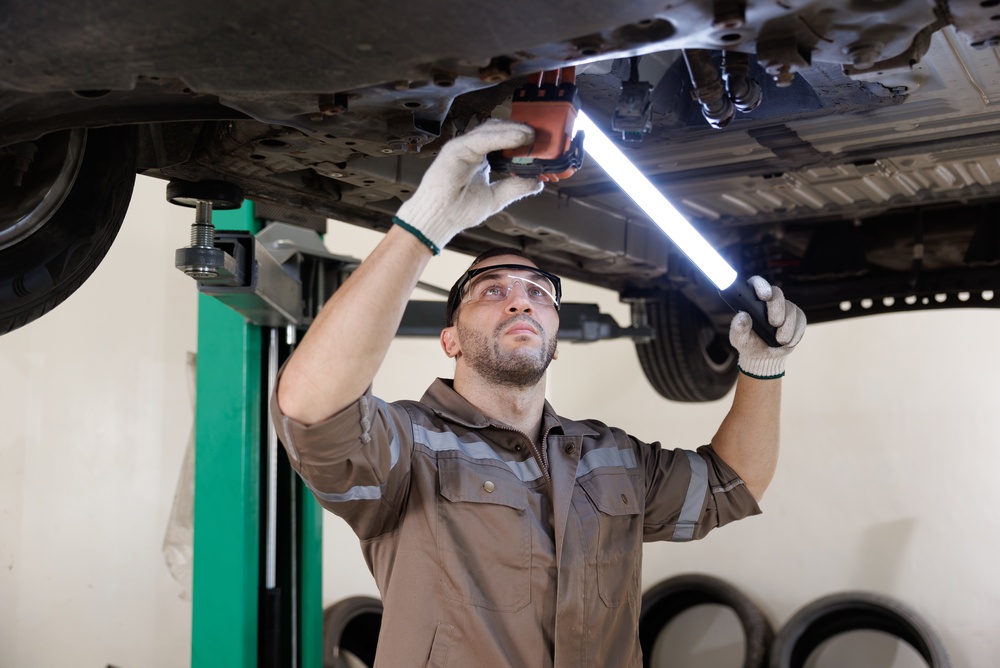
Understanding the mechanical strengths, spatial footprints, and primary applications of different vehicle lifts ensures you select the correct equipment for your workshop layout. Exploring our main vehicle lifts category offers a comprehensive view of professional lifting configurations.
Two-Post Lifts
Two-post lifts are the undisputed workhorses of general repair shops and fast-fit bays due to their minimal footprint and total underbody accessibility.
- Design and Mechanics: Featuring two heavy steel columns anchored to the concrete floor, two-post lifts utilise hydraulic cylinders paired with equalising cables or synchronised electric motors to raise vehicles via four adjustable swing arms.
- Underbody Access: Because the vehicle hangs freely by its frame lifting points, the suspension, axles, gearbox, and exhaust system are fully exposed. This makes two-post lifts the ultimate choice for engine drops, brake servicing, gearbox replacements, and routine maintenance.
Four-Post Lifts
Four-post lifts utilise a sturdy drive-on runway platform supported by four vertical steel columns, offering maximum stability for heavy vehicles.
- Design and Mechanics: Vehicles are simply driven directly onto the parallel tracks, eliminating the need to locate frame lifting points before raising the vehicle.
- Best Applications: Four-post units are ideal for general servicing, commercial van maintenance, and specialised wheel alignment setups when equipped with rear slip plates and turnplate recesses. Combined with auxiliary jacking beams, they allow wheels-free servicing on heavy passenger cars and light commercial vehicles (LCVs).
Scissor Lifts
Scissor lifts utilise collapsible, cross-braced hydraulic frames mounted beneath platforms, offering excellent versatility for space-conscious workshops. You can explore options directly in our scissor lifts collection.
- Full-Height Scissor Lifts: Available in drive-on runway platform configurations for wheel alignment or flush-mount / surface-mount pads for bodywork and tyre fitting. They deliver maximum lifting capacity while keeping the workshop floor wide open when lowered.
- Low-Profile / Mid-Rise Scissor Lifts: Compact, short-runway units designed specifically for high-speed tyre changing, wheel refurbishment, and body shop repairs where full underbody access is not required.
Commercial and Mobile Column Lifts
For heavy goods vehicles (HGVs), buses, and agricultural machinery, fixed lifts are often impractical. Mobile column lifts consist of independent, heavy-duty lifting posts connected via wireless or wired synchronisation networks. Technicians can position 4, 6, or 8 columns around a large multi-axle vehicle to lift massive loads safely. Learn more about heavy-duty workshop logistics in our commercial garage equipment blog hub.
| Lift Type | Primary Mechanism | Underbody Access | Floor Space Required | Primary Operational Focus |
|---|---|---|---|---|
| Two-Post Lifts | Dual hydraulic cylinders, swing arms | Exceptional (Wheels hang free) | Compact / Moderate | General repair, engine/transmission drops, MOTs |
| Four-Post Lifts | Hydraulic drive-on tracks | Limited (Requires jacking beams) | Large | Wheel alignment, commercial vans, rapid inspections |
| Scissor Lifts | Collapsible cross-braced frame | Moderate to High | Compact (Flush-mount available) | Tyre bays, fast-fit body repairs, wheel alignment |
| Mobile Columns | Synchronised mobile posts | High (Wheel-engagement) | Flexible / Transportable | HGVs, commercial truck fleets, municipal buses |
2. The Essential Two-Post Lift Buying Guide
Because two-post lifts handle the majority of mechanical repairs across independent garages, choosing between structural designs is a crucial decision for bay managers.
Clear-Floor vs. Base-Free / Base-Plate Configurations
| Structural Layout Clear-Floor vs. Base-Plate Design |
| Floor Plate Cable Housing Base-Plate Two-Post Fits lower ceiling heights (<3.8m). Steel threshold plate runs between columns across bay floor. |
Overhead Cable Routing Clear-Floor Two-Post Flat floor surface for smooth jack and tool trolley rolling. Requires minimum ceiling height >4.0m. |
Base-Plate Two-Post Lifts
On base-plate models, a flat steel plate runs across the floor between the two columns to house the hydraulic fluid hoses and equalising cables.
- Advantages: Ideal for workshops with lower ceiling heights (under 3.8 meters), as the top of the columns remain open.
- Disadvantages: The floor plate creates a small raised bump, which can interfere with moving gearbox jacks, oil drainers, or low-slung sports cars across the bay floor.
Clear-Floor Two-Post Lifts
Clear-floor designs feature an overhead arch or top crossbeam connecting the columns, routing all cables, hydraulic lines, and shutoff limit bars above the vehicle.
- Advantages: Leaves the bay floor completely flat and unobstructed, allowing tool trolleys, transmission jacks, and oil drainers to roll smoothly under the vehicle.
- Disadvantages: Requires a minimum ceiling height of 4.0 to 4.5 meters to accommodate the overhead structure.
Symmetric vs. Asymmetric Swing Arm Configurations
- Symmetric Lifts: Feature four swing arms of equal length that position the vehicle’s center of gravity directly between the two columns. While offering high balance stability, the vehicle doors line up directly with the steel columns, making entering or exiting the cabin tighter for technicians.
- Asymmetric Lifts: Utilise shorter front arms and longer rear arms paired with rotated column designs. This shifts the vehicle slightly backward, placing 30% of the vehicle body forward of the columns and 70% behind them. This arrangement allows mechanics to open car doors wider without hitting the metal frame, speeding up interior access during service procedures.
Load Capacities and European Safety Engineering
Standard passenger car two-post lifts are rated at 3.5 tonnes to 4.0 tonnes, comfortably handling hatchbacks, saloons, and compact crossover SUVs. However, with the rising popularity of heavy electric vehicles (EVs) with large battery packs and long-wheelbase commercial vans, investing in 4.5-tonne to 5.5-tonne heavy-duty lifts across our Atlas equipment range ensures long-term bay versatility. Redesigned, high-capacity American and European lifting frames ensure full compliance with strict BS EN 1493 safety standards.
3. Floor Support, Mobile Lifting & Heavy Workshop Jacks
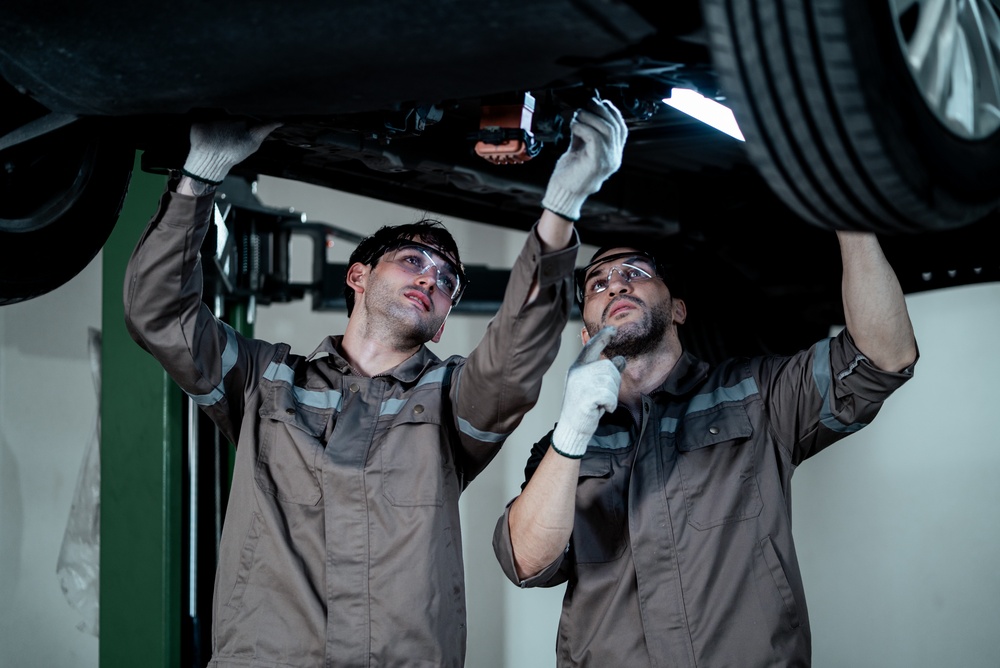
Beyond heavy fixed vehicle lifts, everyday workshop operations rely on robust mobile lifting gear and rigid floor support tools to maintain safe working conditions.
Hydraulic Trolley Jacks and Mobile Floor Support
High-performance hydraulic trolley jacks are essential for rapid wheel changes, suspension checks, and roadside assistance. Premier units, such as Winntec trolley jacks, feature ultra-low profile entry height designs to slip effortlessly under lowered sports cars, combined with turbo-lift dual piston pumps that reach maximum height in minimal strokes.
| Critical Safety Warning Hydraulic Jack Support Protocol |
A hydraulic trolley jack is purely a lifting device, never a vehicle support device. Technicians must NEVER place any part of their body under a vehicle supported solely by a hydraulic jack.
Proper Jack Stand Protocols: Once raised to the desired height, the vehicle must be lowered immediately onto heavy-duty steel axle stands equipped with positive mechanical locking pins or heavy-duty load-rated ratchets.
Jacking Beams and Pit Jacks
When using a four-post lift or an inspection pit for wheel or suspension servicing, auxiliary pneumatic/hydraulic jacking beams are required. These beams roll along the internal rails of four-post runways, allowing mechanics to lift the front or rear axle independently and perform wheel, brake, and steering work. Ensure your bay stays stocked with essential automotive hand tools and support accessories for rapid servicing.
4. Concrete Installation and Structural Foundation Requirements
Installing a two-post or four-post vehicle lift requires strict adherence to concrete foundation specifications. The structural integrity of the lift depends entirely on the strength of the floor beneath it.
Minimum Concrete Specifications for Two-Post Lifts
- Minimum Concrete Depth: A minimum slab thickness of 200mm to 300mm of reinforced concrete is mandatory for standard 3.5t to 5.0t two-post lifts.
- Concrete Strength Rating: Concrete must achieve a minimum compressive strength rating of C25/C30 (or 3,000 PSI) and be fully cured for at least 28 days prior to installation.
- Level Tolerance: The floor must be level within 5mm across the installation footprint. Sloped or uneven surfaces create dangerous uneven loading on column bearings and equalising cables.
Anchor Bolts and Structural Chemical Fixings
Lift columns are secured using heavy-duty mechanical expansion anchors or high-tensile chemical studs driven into the concrete slab. If an existing workshop floor features underfloor heating pipes, structural cracks, or expansion joints within 150mm of the mounting footprint, a dedicated concrete foundation pad must be excavated and poured prior to lift assembly. Browse technical guides in our garage advice hub for further installation best practices.
5. Preventative Maintenance, Inspection & Safety Standards
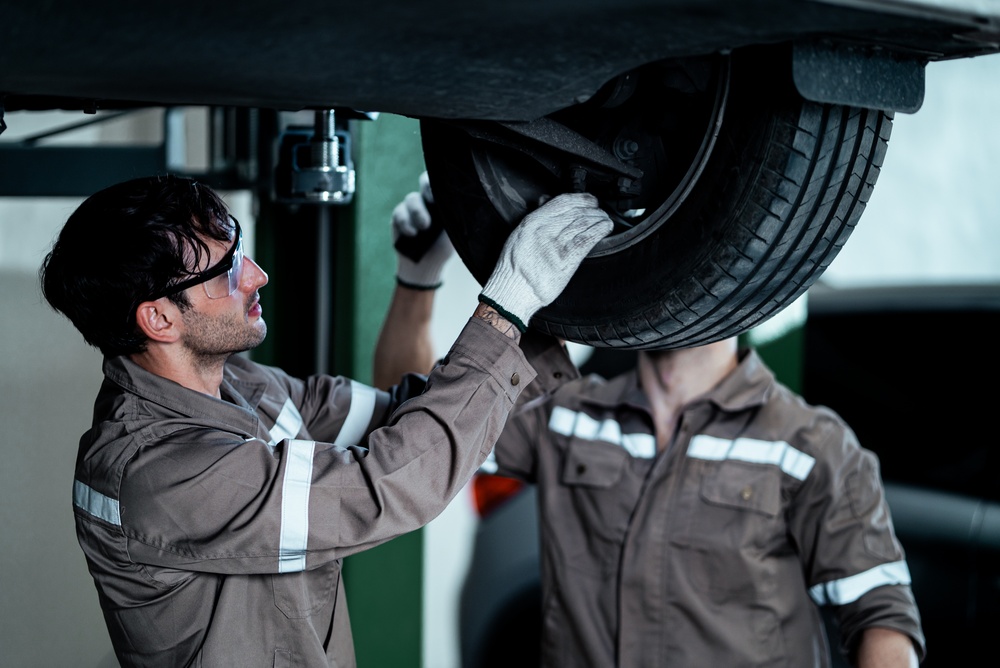
Because vehicle lifts carry immense weight above working technicians, maintaining strict inspection schedules and statutory compliance is a legal necessity.
Statutory Compliance: BS EN 1493 and LOLER
In the UK, garage lifts fall under the Lifting Operations and Lifting Equipment Regulations 1998 (LOLER) and Provision and Use of Work Equipment Regulations 1998 (PUWER).
- Thorough Examination (Every 6 Months): Under LOLER, any vehicle lift used to elevate personnel or under which mechanics work must undergo an official Thorough Examination by a competent qualified engineer every 6 months.
- BS EN 1493 Compliance: Ensures all imported or newly manufactured vehicle lifts incorporate secondary mechanical safety latches, automatic arm locks, velocity fuses on hydraulic lines, and toe-guard protections.
Daily, Monthly, and Annual Inspection Protocols
| Frequency | Target System | Inspection & Maintenance Action |
|---|---|---|
| Daily Checks | Lifting Pads, Arm Locks & Latches | Inspect all rubber pads for cracks or embedded metal shavings; verify automatic arm restraints engage when elevated; listen for clear mechanical safety latch clicks. |
| Monthly Checks | Equalising Cables, Tracks, Hydraulics & Anchors | Check steel equalising cable tension and turnbuckles; grease column slide tracks; inspect hydraulic lines linked to garage air compressors; re-torque floor anchor bolts. Keep spare parts and accessories stocked to avoid bay downtime. |
| Annual Audit | LOLER Certification & Foundation Integrity | Undergo full statutory LOLER 6-month examination by a qualified engineer; complete structural anchor bolt torque testing and slab inspection. |
Elevate Your Garage Capabilities Today
Investing in commercial-grade vehicle lifts and heavy lifting equipment directly expands your workshop’s service capabilities, improves technician safety, and speeds up turnaround times across every job. From compact scissor lifts for tyre bays to high-capacity two-post and four-post lifts for full mechanical repairs, selecting certified, robust equipment guarantees high operational returns for years to come.
Explore the Range and Consult Our Experts
- Browse Full Equipment Options: Visit our shop to view our complete selection of vehicle lifts, check out current special offers, or explore quality second hand garage equipment.
- Need Professional Advice? Our technical team can evaluate your workshop floor depth, ceiling height, and power setup to recommend the perfect lifting solution. Contact Tyre Bay Direct today or request a quote online to outfit your bay with industry-leading vehicle lifts.