



Commercial Garage Equipment, Garage Equipment, Tyre Bay Direct, Wheel Balancers, Wheel Balancers
Precision Wheel Alignment Systems & Setup Guide
Precision wheel alignment is one of the most profitable service offerings a modern garage or tyre bay can introduce. Proper alignment directly addresses premature tyre wear, poor vehicle handling, and compromised fuel efficiency. With modern vehicles increasingly equipped with complex suspension geometry and Advanced Driver Assistance Systems (ADAS), accurate alignment setup has evolved from a basic routine check into an essential aspect of routine vehicle servicing.
This comprehensive guide covers alignment technology options, key alignment parameters, essential accessories, calibration procedures, and the commercial benefits of adding wheel alignment capabilities to your workshop.
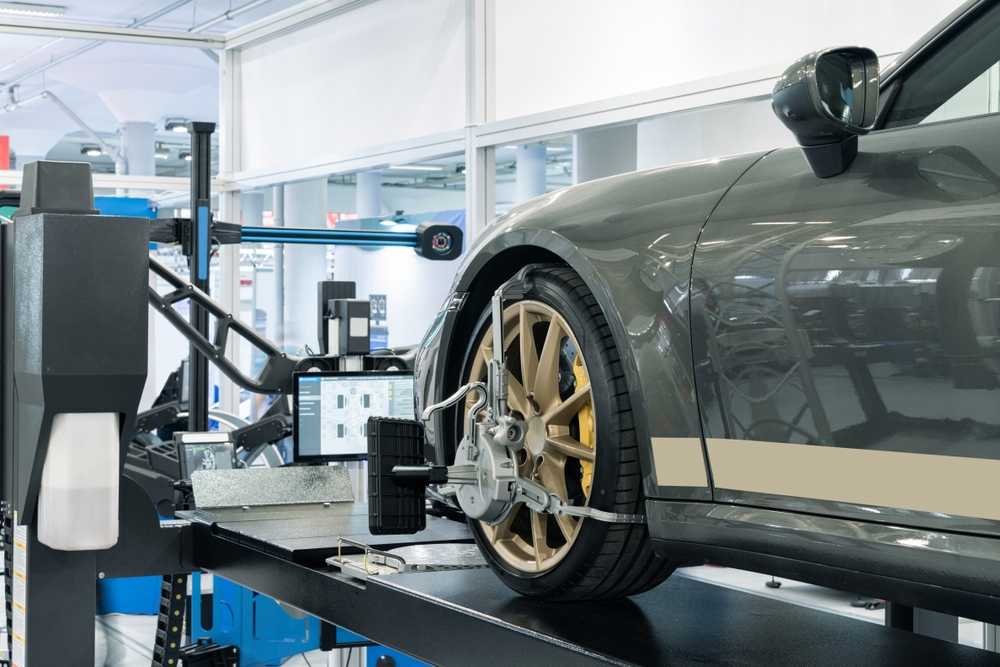
1. Comparing Alignment Technologies: Optical, Laser, 3D & 8-CCD Systems
Choosing the right alignment technology depends on your workshop’s volume, budget, and bay spatial footprint.
Optical & Laser Alignment Systems
Laser alignment systems remain a popular choice for start-up bays, mobile operators, and smaller independent workshops due to their simplicity and portability.
- How They Work: Wall-hung or wheel-mounted laser heads project a focused light beam onto graduated measuring scales attached to the opposite wheels or rear-mounted targets.
- Advantages: Extremely cost-effective, portable, quick to set up, and requires no ongoing software subscription fees.
- Limitations: Primarily measures front-to-rear toe angles. Requires manual measurement reading and manual calculation for camber, caster, and thrust angle adjustments.
8-CCD Computerized Alignment Systems
Computerized 8-CCD (Charge-Coupled Device) systems utilize electronic sensor heads mounted on all four wheels to form a continuous infrared measuring grid around the vehicle.
- How They Work: 8 individual CCD sensors continuously measure spatial angles between all four wheels and transfer data wirelessly (via Bluetooth or radio frequency) to a central cabinet console.
- Advantages: Measures full 4-wheel geometry (Toe, Camber, Caster, KPI, Thrust Angle). Features live vehicle databases, step-by-step adjustment graphics, and automated before/after customer report generation.
- Limitations: Sensor heads require internal battery charging and careful handling to maintain calibration.
3D High-Definition Camera Alignment Systems
3D alignment represents the pinnacle of high-volume alignment technology for busy fast-fit centers and franchised dealerships.
- How They Work: High-resolution digital cameras mounted on an overhead beam continuously track passive, lightweight target reflectors attached to the vehicle’s wheels.
- Advantages: Extremely fast measurement cycle times (under 2 minutes for a full scan), zero electronics on the wheels (eliminating expensive drop-damage repairs), and minimal physical maintenance.
- Limitations: Requires a fixed, dedicated alignment bay with sufficient distance between the camera tower and the lift.
| Feature / System | Entry-Level Laser | 8-CCD Computerized | 3D High-Definition Camera |
|---|---|---|---|
| Primary Geometry Measured | Front & Rear Toe | Full 4-Wheel (Toe, Camber, Caster) | Full 4-Wheel & Live Body Angles |
| Measurement Speed | 5 – 10 Minutes | 3 – 5 Minutes | Under 2 Minutes |
| Vehicle Specs Database | Manual Lookup / Specs Book | Integrated On-Console Database | Integrated On-Console Database |
| Customer Printout | Manual Record Sheet | Automated Before/After Color Report | Automated Before/After Color Report |
| Ideal Workshop Type | Budget bays, mobile fitters | Independent repair shops, tyre bays | High-volume alignment centers, MOT bays |
2. Key Wheel Alignment Parameters Explained
Understanding fundamental suspension geometry ensures technicians can accurately diagnose handling issues and uneven tread wear patterns.
| Suspension Geometry Core Alignment Angles & Diagnostic Impact |
| Top View Toe-In / Toe-Out Wheel direction vs. centerline. Primary cause of rapid shoulder scrubbing. |
Front View Camber (+/-) Inward/outward vertical tilt. Controls inner or outer tread edge wear. |
Side View Caster Angle Steering axis tilt. Governs straight-line stability & wheel self-centering. |
Rear Axle Thrust Angle Rear wheel direction vs. centerline. Prevents vehicle “dog-tracking”. |
- Toe (Toe-In / Toe-Out): The direction the wheels point relative to the centerline of the vehicle when viewed from directly above. Incorrect toe is the primary cause of rapid, uneven tread scrubbing across the inner or outer shoulder of a tyre.
- Camber (Positive / Negative): The inward or outward tilt of the wheel relative to the vertical axis when viewed from the front of the vehicle. Excessive negative camber wears the inside edge of the tread, while positive camber wears the outside edge.
- Caster: The forward or backward tilt of the steering axis line when viewed from the side of the vehicle. Proper caster angle ensures straight-line stability and steering wheel self-centering after turns.
- Thrust Angle: The direction in which the rear wheels are pointing relative to the vehicle’s geometric centerline. An incorrect thrust angle causes the vehicle to “dog-track” sideways down a straight road.
3. Essential Alignment Bay Setup & Accessories
Accurate wheel alignment requires a level foundation and the right supporting equipment to eliminate measurement errors.
Alignment Swivel / Turntable Plates
Alignment swivel plates (turntables) are placed beneath the front wheels to eliminate tyre friction against the floor or lift runway when turning the steering wheel during caster sweeps or toe adjustments.
- Rear Slip Plates: Positioned beneath the rear wheels on 4-post or scissor alignment lifts to allow the rear suspension to relax without lateral tire binding during adjustment.
- Low-Friction Bearings: Quality stainless steel ball-bearing swivel plates ensure smooth, unrestricted wheel movement across full steering angles.
Steering Wheel Locks & Brake Pedal Depressors
- Brake Pedal Depressor: Locks the foot brake pedal down during caster sweeps to prevent the wheels from rotating, ensuring accurate measurement calculations.
- Steering Wheel Level & Lock: Holds the steering wheel perfectly centered while adjusting front toe tie rods, preventing off-center steering wheel complaints from customers after service.
Leveling Requirements for Alignment Lifts
Whether utilizing a 4-post runway lift, a flush-mount scissor lift, or a dedicated alignment pit, the runway surfaces must be level within 1mm to 2mm from front-to-rear and side-to-side. An unlevel lift platform transfers artificial weight distribution to the vehicle suspension, distorting camber and caster readings.
4. Calibration & Maintenance Best Practices
To ensure reliable, repeatable measurements, alignment systems require routine inspection and periodic re-calibration.
Daily and Weekly Equipment Maintenance
- Inspect Wheel Clamps and Pins: Ensure the rim contact pins on wheel clamps are clean, undamaged, and free of debris that could scratch alloy rims or misalign the sensor mounting.
- Clean Optical Lenses & Targets: Gently wipe CCD sensor lenses, laser diodes, and 3D target plates with isopropyl alcohol wipes to remove dust, oil overspray, and thumbprints.
- Check Cable & Wireless Connections: Inspect sensor cables for fraying or check wireless Bluetooth connectivity between sensor heads and the main console.
System Calibration Schedules
- Annual Recalibration: Computerized 8-CCD and 3D camera systems should undergo professional calibration using manufacturer-certified calibration rigs at least once a year, or immediately following any accidental sensor head drop.
- Self-Calibration Checks: Many modern 8-CCD systems feature built-in self-checking routines that allow technicians to verify sensor alignment accuracy on-site using a precision calibration bar.
5. Commercial & Customer Benefits of Alignment Services
Offering wheel alignment delivers strong financial returns for garage owners while providing clear value to vehicle drivers.
Workshop Revenue & Profit Potential
- High-Margin Upsell: Performing a quick alignment check during routine tyre replacement, brake servicing, or suspension repairs converts a high percentage of routine visits into premium alignment adjustments.
- Fast Equipment Payback: With low operational consumable costs per job, a mid-range 8-CCD or 3D alignment system typically pays for itself within 6 to 12 months in a moderately active tyre bay.
Direct Customer Benefits
- Extended Tyre Life: Correct alignment eliminates tread scrubbing and irregular shoulder wear, allowing tyres to achieve their full mileage potential.
- Improved Fuel Economy: Reducing rolling resistance caused by misaligned wheels lowers overall fuel consumption.
- Enhanced Driving Safety: Eliminates vehicle pulling, wandering at highway speeds, and crooked steering wheel angles, ensuring predictable handling under emergency braking.
Upgrade Your Bay with Precision Alignment Today
Integrating precision wheel alignment equipment into your workshop transforms routine tyre fitting into a high-yield, technical service hub. From portable laser systems to high-tech 8-CCD computerized setups, selecting the right equipment ensures your technicians can deliver accurate, repeatable, and profitable alignment results on every vehicle.
Explore Equipment & Consult Our Experts
- Browse Alignment Equipment:
Explore our complete collection of wheel alignment systems, check out precision alignment accessories and swivel plates, or view our full range of vehicle lifts. - Get Professional Setup Advice:
Need help choosing between an 8-CCD computerized system and a 3D camera setup for your bay? Read technical insights on our garage advice blog, contact Tyre Bay Direct online, or request a custom equipment quote today.