



Equip your workshop with industry-grade automotive and garage diagnostic tools engineered for fast, pin-point fault detection across modern vehicle electronic systems.
From bi-directional full-system scan tablets and wireless OBD2 code readers to specialised battery conductance analysers and ECU programming power supplies, our trade-ready diagnostic equipment gives you the speed, protocol coverage, and accuracy needed to turn complex fault codes into successful repairs.
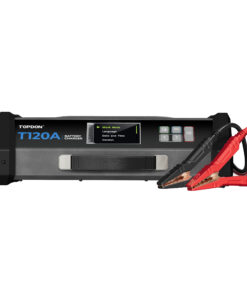
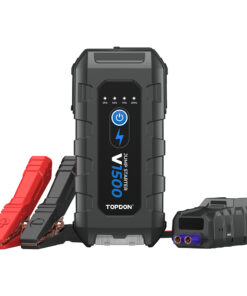
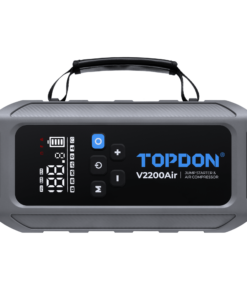
Tools & Equipment
£144.00 incl VAT£120.00 excl VAT
In Stock
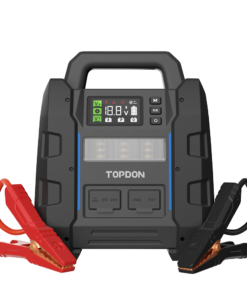
Automotive Diagnostics Tools Explored
Modern vehicle engineering relies on sophisticated microprocessors, complex sensor networks, and dedicated Controller Area Network (CAN) bus architectures.
Pinpointing mechanical faults or intermittent electrical gremlins requires professional equipment capable of translating low-level binary data into actionable diagnostic trouble codes (DTCs).
Equipping your workshop with high-calibre automotive diagnostic tools ensures rapid fault isolation across engine control units, transmission systems, and supplementary restraint modules.
From entry-level Bluetooth code readers to bi-directional workshop tablets, accurate telemetry protects vehicle electronics from catastrophic misdiagnosis whilst maximising workshop turnaround speeds.
You can also integrate comprehensive battery care and testing equipment to verify clean system voltages before undertaking complex electronic recalibrations.
Why is clean voltage stability critical during vehicle diagnostics and ECU flashing?
Modern electronic control units operate on precise 12-volt and 24-volt reference lines where even minor voltage ripples can cause catastrophic programming failures.
During an active scan or ECU flash rewrite, a voltage drop below 12.2 volts risks corrupting the flash memory chip entirely.
This failure mode bricks the module, rendering essential vehicle immobilisers or engine control systems completely unresponsive.
Why does this matter so much in a workshop environment?
Using a stable, clean microprocessor-controlled diagnostic power supply prevents transient voltage spikes from damaging delicate silicon logic gates during prolonged key-on, engine-off diagnostic procedures.
How does live sensor graphing prevent unnecessary component replacement?
Static trouble codes only reveal that a sensor signal is out of expected operating range, not necessarily that the component itself has failed physically.
Live parameter identification (PID) graphing tracks real-time microsecond electrical fluctuations across oxygen sensors, mass airflow meters, and throttle position potentiometers.
Technicians can visually identify signal dropouts, excessive electrical noise, or delayed response curves that do not immediately trigger a hard DTC.
For example...
Observing a sluggish switching frequency on an upstream lambda sensor reveals fuel trim drift caused by an unmetered vacuum leak rather than a faulty heater circuit.
What is the technical difference between generic OBD2 and manufacturer-specific OE-level diagnostics?
Generic OBD2 diagnostics are legally mandated to communicate solely through standardised powertrain protocols such as ISO 15765-4 (CAN) and SAE J1850.
These standard protocols only access emissions-related engine and transmission data points.
In contrast, OE-level diagnostic software opens bidirectional communication across proprietary gateway architectures.
This grants complete access to non-emissions sub-systems including:
- Advanced Driver Assistance Systems (ADAS) radar and camera arrays
- Electronic Parking Brake (EPB) service wind-back routines
- Diesel Particulate Filter (DPF) forced regeneration cycles
- Battery Management System (BMS) cell registration algorithms
Accessing these proprietary sub-networks requires advanced communication protocols like DoIP (Diagnostics over Internet Protocol) and CAN-FD (Flexible Data-Rate).
How to Choose the Perfect Automotive Diagnostics Tools?
Selecting the right diagnostic setup demands a clear balance between vehicle coverage, communication speed, and hardware resilience.
A mobile breakdown technician requires a portable, battery-powered scan tool with rapid wireless Bluetooth VCI connectivity alongside robust mobile tyre fitting equipment.
A high-volume mechanical repair garage requires dedicated diagnostic tablets featuring active bi-directional actuation testing, component matching, and guided troubleshooting routines, working alongside primary automotive workshop tools and equipment.
So what key factors should guide your purchase?
Consider the processing hardware, the internal storage for offline database mapping, and the specific diagnostic communication standards supported by the scan tool interface.
Essential Workshop Selection Metric: Ensure the diagnostic hardware supports modern CAN-FD and DoIP protocols to maintain full diagnostic capability on vehicles manufactured after 2020.
Variations and Types
Full-System Professional Tablet Scanners
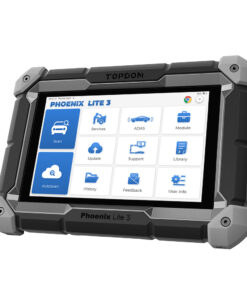
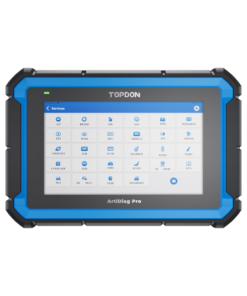
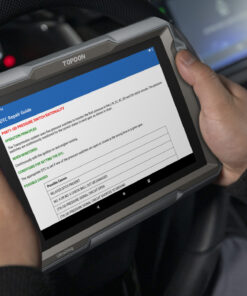
Professional Android-based diagnostic tablets represent the gold standard for dedicated independent repair workshops.
These units feature multi-core processors, ruggedised drop-proof rubber casings, and high-definition capacitive touchscreens designed for greasy workshop environments.
They provide comprehensive module scanning, topology mapping of the entire vehicle multiplex network, and bi-directional active component testing.
How does topology mapping improve efficiency?
It presents a colour-coded visual diagram of every electronic bus on the vehicle, instantly highlighting open-circuit bus lines or unresponsive gateway modules.
Handheld Code Readers and Reset Scanners
Dedicated handheld scanners offer lightning-fast boot times for rapid servicing, quick code triage, and road-test data logging, pairing effectively with standard automotive hand tools.
These tools feature rugged physical keypads that can be operated seamlessly whilst wearing heavy workshop blue nitrile gloves from our janitorial PPE selection.
They are specifically pre-configured to execute essential workshop maintenance resets quickly without navigating deep configuration menus.
Routine service resets handled natively include:
- Oil service interval reset and mileage counter recalibration
- Electronic parking brake caliper retraction for pad replacement
- Steering angle sensor zero-point calibration
- Throttle body adaptation routines
Specialised Battery Conductance Testers and Diagnostic Power Supplies
Modern Stop-Start and mild-hybrid vehicles rely on delicate Absorbent Glass Mat (AGM) and Enhanced Flooded Batteries (EFB).
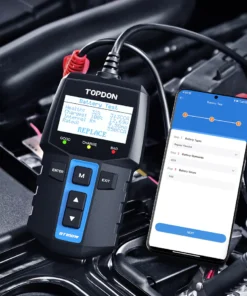
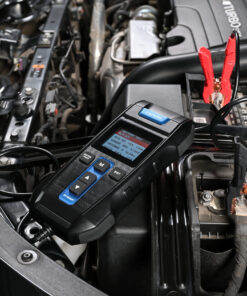
Specialised battery analysers use passive conductance algorithms to measure internal plate resistance without draining the cell or generating hazardous internal heat.
Accurate conductance testing detects dead internal cells, sulfation build-up, and lost Cold Cranking Amps (CCA) before roadside breakdown occurs as part of essential vehicle maintenance.
Furthermore...
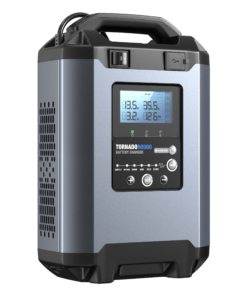
High-output diagnostic flash chargers supply continuous, ripple-free current up to 120 amps during key-on software programming.
Specialist Considerations
Security Gateway Access and Cyber Security Protocols
Modern vehicle manufacturers implement strict Security Gateway (SGW) modules to prevent unauthorised third-party CAN bus access.
Vehicles from FCA, Renault, Nissan, and the VAG Group require authenticated cloud clearance to clear DTCs or perform active component adaptations.
Professional diagnostic platforms integrate certified SGW unlocking accounts directly into the tool software via active Wi-Fi connections.
Without official SGW authentication, a generic scan tool will only read static fault codes and remain locked out from executing critical actuator tests or calibrations.
Bus Speed Protocols, CAN-FD, and Ethernet DoIP Compatibility
High-resolution vehicle infotainment, lidar, and radar systems transfer gigabytes of operational data every second.
Traditional high-speed CAN bus connections max out at 1 Mbps, which creates a massive bottleneck during ECU firmware rewrites.
Modern diagnostic interfaces utilise CAN-FD (up to 8 Mbps) and 100BASE-T1 automotive Ethernet DoIP (up to 100 Mbps).
What is the direct consequence of running outdated diagnostic hardware?
Attempting to scan or calibrate a modern chassis using a legacy VCI tool will result in dropped packets, partial communication timeouts, or complete refusal to communicate with modern safety modules.
Rugged Workshop Durability and Thermal Management
Workshop diagnostic hardware faces harsh operational hazards including oil splashes, mechanical vibration, and extreme temperature variations.
Top-tier diagnostic tablets use impact-absorbent polycarbonate shells combined with IP65-rated ingress protection against fluid and dust penetration.
Internal copper heat sinks and fanless cooling enclosures prevent thermal throttling during continuous full-load vehicle system scans on hot summer afternoons.
This rugged construction guarantees stable processing performance during long coding sessions.
Quality and Brand Selection
Investing in reliable diagnostic equipment protects your workshop reputation, enhances billable labour efficiency, and eliminates diagnostic guesswork.
Market-leading diagnostic solutions from industry innovators provide class-leading processing speed, expansive vehicle software databases, and intuitive user interfaces alongside our premium range of diagnostics and dedicated Power Probe testing instruments.
From versatile scan tools for comprehensive workshop fault-finding to precision battery analysers, TPMS tools like our dedicated Bartec systems and high-output flash power supplies, choosing proven hardware ensures flawless vehicle compatibility.
Explore our complete collection of commercial-grade diagnostic tools, workshop equipment, and special offers to upgrade your fault-finding capabilities today.
Read our great
customer reviews
Great after sales service...
I had an issue with the tyre changer, rang for help, got a video call back within minutes and then received a live walk through the problem talking me through the actions required to rectify.
I also enquired about operating instructions for the balancer as I was struggling to understand some of the written ones. I then got a live training session on the video call followed up with a link to a training video in a message.
Excellent after sales service from Neal.
Great customer service and responsive...
Great customer service and responsiveness. I was dealing with a gentleman named Neal, who was very responsive to my phone calls, answered all my questions, and provided me with solutions. I would definitely recommend him to anyone and will use his excellent service in the future. Keep up the good work, guys.
Quality of service...
Anthony has now dealt with my orders on 2 occasions, very helpful and polite and noticed our previous order ... can’t recommend more he knows his equipment from the conversation had, haven’t needed to use the “help or after service” but certainly wouldn’t think twice of doing with how Anthony has dealt with anything we asked from enquiry to buying. Top class service delivery over Xmas 2019 was as agreed and the delivery driver was top class in rush hour so made him a brew minus the bacon butty as we had none left!! Give the guys a pay rise but price increase.
Thanks again look forward to purchasing from you soon. 100% service from start to end.