


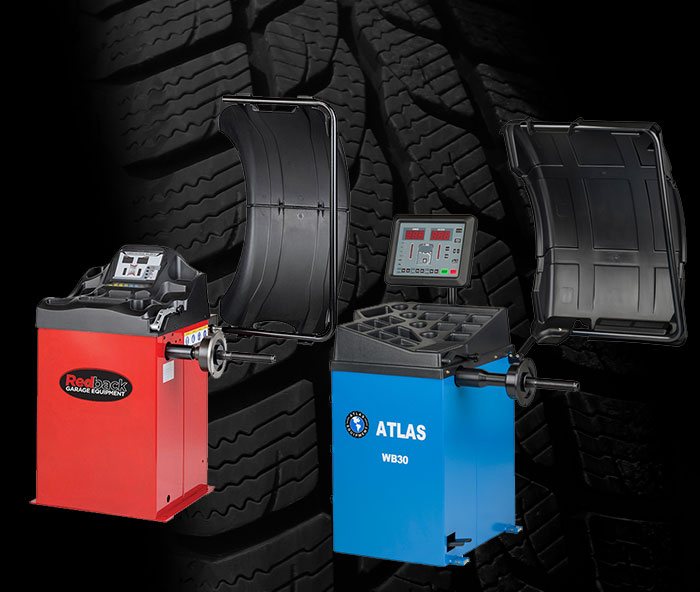
Second Hand Tyre Fitting Equipment
Please see below some of our used equipment and machines currently in our showroom or available second hand. Seen a second-hand piece of equipment that you like and want to know more?
CALL NOW FOR CURRENT USED STOCK | 01527 883 580
Out of stock
-60% off
Cordless and Air Tools
Original price was: £59.99.£23.99Current price is: £23.99. incl VAT Original price was: £49.99.£19.99Current price is: £19.99. excl VAT
Out of Stock
Second Hand Tyre Fitting Equipment Explored
Modern automotive workshops rely heavily on precision machinery to handle increasingly complex wheel and tyre combinations.
Investing in high-end garage equipment often represents the single largest capital expenditure for independent tyre bays and mobile fitting operations.
Buying pre-owned machinery offers a strategic pathway to scaling your service capacity without overextending your business finances.
Whether you are expanding a mobile fleet or kitting out a new static workshop, you can find reliable, industrial-grade solutions in our dedicated equipment sale section.
Refurbished tyre changers and wheel balancers provide the exact same functional throughput as brand-new units when maintained with proper care and regular calibration.
How does industrial-grade equipment improve your workshop turnover?
Efficiency in a busy tyre bay is measured in minutes per job, and older, manual equipment often creates significant bottlenecks during peak seasonal changeovers.
Upgrading to semi-automatic or fully automated tyre changing systems drastically reduces the physical effort required to break beads and mount low-profile tyres.
This allows your technicians to move from one vehicle to the next with minimal downtime, directly increasing your daily profit margins.
Reliable equipment also prevents the costly rework associated with poorly fitted tyres or improperly balanced wheels.
A fast, precise wheel balancer ensures that the final product leaving your workshop is perfectly weighted, which builds immediate trust with your customer base.
Why is preventative maintenance crucial for second-hand machinery?
Machinery that has seen previous service requires a baseline assessment to ensure its internal components, seals, and pneumatic valves are operating at peak capacity.
Regular maintenance is not just about keeping the machine running; it is about protecting the expensive rims and high-performance tyres you service daily.
Worn-out mounting heads or degraded plastic rim protectors will quickly scratch alloy wheels, leading to liability issues and dissatisfied customers.
We recommend a full service of any newly acquired pre-owned equipment to calibrate pressure regulators, lubricate moving parts, and flush out accumulated condensation from pneumatic lines.
This proactive approach extends the lifespan of your investment by years.
What are the safety implications of using legacy fitting equipment?
Safety is the primary consideration when operating heavy machinery, and older units must be inspected for structural integrity and electrical compliance.
Modern health and safety regulations dictate that all moving parts must have proper guards to prevent operator injury during the high-torque mounting process.
It is vital to check that emergency stop buttons are fully operational and that the electrical supply matches the specific requirements of the motor.
Using older, well-maintained equipment is perfectly safe provided you adhere to manufacturer guidelines regarding tyre inflation pressures and bead-breaking limits.
Always ensure your team is trained on the specific operational nuances of each machine, as control layouts can vary significantly between brands and production eras.
How to Choose the Perfect Second Hand Tyre Fitting Equipment
Selecting the right equipment from the second-hand market requires a clear understanding of your workshop's daily throughput and the types of vehicles you service most frequently.
It is easy to get caught up in the allure of high-spec machinery, but matching the machine to your actual business requirements is where the true value lies.
So what should you consider here?
Start by evaluating the maximum rim diameter and width your current client base demands.
If your shop services primarily modern SUVs and performance cars, you will need a tyre changer with a wide clamping range and, ideally, an assist arm for stiff run-flat tyres.
For instance...
A standard passenger car changer will struggle and likely damage sidewalls if you attempt to force ultra-low-profile or run-flat tyres onto a rim without proper assistance.
You must also assess the spatial constraints of your workshop floor or the dimensions of your mobile fitting van.
Compact, space-saving machines are available for smaller vans, whilst heavy-duty, floor-mounted units are designed for high-volume static workshops.
Consider the power supply requirements as well; some industrial machines require three-phase power, which may necessitate an electrical upgrade if your premises only support single-phase.
Always prioritise equipment with readily available parts, as even the most robust machine will eventually require seals, belts, or sensors.
Variations and Types
Semi-Automatic vs Fully Automatic Tyre Changers
Semi-automatic tyre changers feature a swing-arm design where the horizontal arm is moved manually to position the mounting head.
These units are ideal for entry-level workshops or mobile fitters due to their robust simplicity and compact footprint.
Fully automatic tyre changers utilise a tilting column design, controlled via a foot pedal, which streamlines the positioning process for faster operation.
Automatic units are superior for high-volume environments where technicians need to cycle through multiple tyre changes per hour without manual lifting.
The pneumatic tilt column ensures that the mounting head returns to the exact same setting, maintaining consistency across every rim.
Wheel Balancers Hand-Spin vs Motorised Systems
Hand-spin wheel balancers are the gold standard for mobile tyre fitters who need portable, 12V-powered solutions in the field.
They provide accurate readings for static balancing, which is sufficient for many standard passenger car applications.
Motorised digital balancers are essential for static workshops, offering dynamic balancing that accounts for both the inner and outer rim planes.
Advanced motorised units often feature sonar or laser scanners to automatically detect rim dimensions, eliminating manual data entry errors.
These units also provide sophisticated 'hidden weight' features for alloy wheels, ensuring balancing lead segments are placed behind the spokes for a cleaner aesthetic.
Air Compressors and Pneumatic Infrastructure
Your tyre changer and balancer are only as good as the air supply feeding them; moisture in the lines is the silent killer of pneumatic seals.
Screw compressors are preferred for high-volume workshops as they provide a continuous, stable air supply without the pulsing associated with piston-style compressors.
Piston compressors are perfectly adequate for lower-volume bays, provided they are fitted with adequate air dryers and filtration systems.
Neglecting your air treatment infrastructure will cause rust to form inside the pneumatic cylinders of your tyre changer, leading to leaks and eventual hydraulic failure.
Always ensure your air receiver tank is regularly drained and inspected to meet pressure vessel safety regulations.
Specialist Considerations
Run-Flat and Low-Profile Tyre Capability
Mounting run-flat tyres requires significantly more force and specialized leverage than standard rubber, making an assist arm a non-negotiable requirement.
Without an assist arm, you risk tearing the stiff reinforced sidewalls of the run-flat tyre during the mounting process.
These specialized arms hold the bead in the drop-centre of the rim, preventing the tyre from popping off or getting jammed during the rotation.
If your workshop frequently deals with premium vehicle marques, you must ensure your pre-owned changer is compatible with modern run-flat technology.
This capability adds immense value to your service menu and justifies higher labour rates for specialized tyre handling.
Mobile Fitting Van Integration
Equipping a van for mobile tyre service requires a deep understanding of weight distribution and power management.
Heavy machinery must be bolted directly to the chassis or reinforced floor sections to prevent movement during transit.
You must balance the power draw of your tyre changer and balancer with the capacity of your van's inverter and battery bank.
It is often necessary to install a dedicated generator if you plan to operate air-hungry compressors and heavy-duty changers simultaneously.
Consider the ergonomics of the space; ensure the tyre changer is positioned near the side door for easy loading and unloading of heavy tyres.
Calibration and Accuracy Standards
Your wheel balancer is a precision instrument, and accuracy will drift over time due to vibrations, temperature changes, and usage.
Regular calibration using a certified test wheel is essential to maintain the integrity of your balancing results.
A machine that is out of calibration will cause phantom vibrations, leading to customer complaints and unnecessary rebalancing attempts.
Many digital balancers have built-in self-calibration modes that can be accessed with a standard calibration weight kit.
Always keep a log of your calibration dates to ensure that every job performed meets professional industry standards for road safety.
Quality & Brand Selection
Choosing pre-owned equipment from renowned industry manufacturers is a deliberate strategy to guarantee long-term reliability and support.
Brands such as Corghi, Hofmann, and Ravaglioli have built their reputations on durable engineering and widely available replacement parts.
Even when purchasing second-hand, investing in these premium names ensures you can source new sensors, seals, or motors for years to come.
Cheaper, obscure brands may offer lower initial costs, but they often present significant challenges when repair parts become obsolete.
Our curated selection of clearance and pre-owned machinery undergoes rigorous checks to ensure that the internal components meet our high operational standards.
By selecting equipment that has been maintained and inspected by industry professionals, you eliminate the risk of purchasing hidden faults.
Explore our current inventory of workshop machinery in our equipment sale and empower your business with the tools it needs to succeed.
Read our great
customer reviews
Great after sales service...
I had an issue with the tyre changer, rang for help, got a video call back within minutes and then received a live walk through the problem talking me through the actions required to rectify.
I also enquired about operating instructions for the balancer as I was struggling to understand some of the written ones. I then got a live training session on the video call followed up with a link to a training video in a message.
Excellent after sales service from Neal.
Great customer service and responsive...
Great customer service and responsiveness. I was dealing with a gentleman named Neal, who was very responsive to my phone calls, answered all my questions, and provided me with solutions. I would definitely recommend him to anyone and will use his excellent service in the future. Keep up the good work, guys.
Quality of service...
Anthony has now dealt with my orders on 2 occasions, very helpful and polite and noticed our previous order ... can’t recommend more he knows his equipment from the conversation had, haven’t needed to use the “help or after service” but certainly wouldn’t think twice of doing with how Anthony has dealt with anything we asked from enquiry to buying. Top class service delivery over Xmas 2019 was as agreed and the delivery driver was top class in rush hour so made him a brew minus the bacon butty as we had none left!! Give the guys a pay rise but price increase.
Thanks again look forward to purchasing from you soon. 100% service from start to end.