



All new vehicles come equipped with a tyre pressure monitoring system (TPMS). Our extensive range of TPMS tools and sensors allow you to efficiently service, diagnose and repair these systems, saving you hassle and keeping your customers’ cars safe and roadworthy. Learn more and discover the full range below.
View Our TPMS Products What is TPMS?Our TPMS Products
Our product range includes everything you need to maintain and repair TPMS systems from a whole host of different manufacturers. We offer a range of TPMS reset tools and replacement sensors, all of which are available with UK-wide next-day delivery. All of our products are supplied by Bartec Auto ID of Barnsley – the UK’s leading manufacturer.
Tyre Pressure Monitoring Systems (TPMS)
Tyre Pressure Monitoring Systems have completely changed everyday tyre fitting across the UK. What used to be a simple valve swap during a tyre replacement is now an essential diagnostic and electronic service. Every passenger car registered since late 2014 comes fitted with TPMS as standard. Because a glowing TPMS warning light means an immediate MOT failure, your customers rely on you to get it sorted quickly and correctly.
At Tyre Bay Direct, we stock a complete collection of TPMS tools, replacement TPMS sensors, service kits, and diagnostic tools. Whether you run a busy commercial tyre shop, a dealership workshop, or a mobile tyre fitting van, having the right gear on the shelf means you never have to turn profitable work away.
Understanding Direct and Indirect TPMS
Before jumping into the kit, it helps to look at how these systems operate on modern vehicles. Most cars use one of two setups.
- Indirect systems do not use physical sensors inside the wheels. Instead, they rely on the vehicle ABS and wheel speed sensors to estimate tyre diameter. If a tyre loses pressure, it rolls faster than the others, which triggers the dashboard light. These setups usually just need a tyre inflation check using precision tyre inflation gauges and a manual reset through the dashboard menu.
- Direct systems use physical sensor units mounted directly to the wheel rim, attached to either a rubber snap-in valve or an aluminium clamp-in specialist valve. These sensors measure real-time pressure and temperature, broadcasting the data straight to the car computer.
Direct systems make up the bulk of everyday workshop repairs. Sensors run on small internal batteries that naturally expire after five to seven years. Road salt causes metal stems to seize, valve cores corrode, and rubber grommets perish over time. When your customer comes in for new tyres, their direct TPMS setup will almost always need servicing or total replacement alongside fresh tyre valves and accurate wheel balance weights.
TPMS Diagnostic and Programming Tools
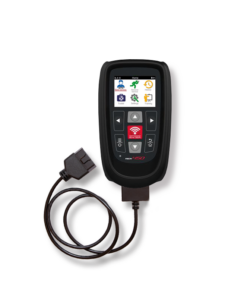
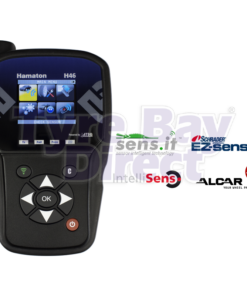
To work on modern tyre pressure systems, you need reliable diagnostic and programming tools. We proudly supply industry-leading devices from Bartec Auto ID, the UK market leader in TPMS technology.
A quality TPMS diagnostic tool allows your technicians to test wheel sensors before touching a wheel nut with their air tools and impact wrenches. By reading the sensor through the sidewall, you can instantly see tyre pressure, operating temperature, transmission frequency (such as 433MHz used across Europe), and remaining battery life. Carrying out this quick check before starting any tyre fitting job on your tyre changers protects your business from being blamed for pre-existing faults.
Our TPMS programming tools make configuring universal replacement sensors straightforward. Instead of keeping hundreds of individual original equipment sensors on your shelves, a universal tool lets you program blank aftermarket sensors in seconds. Simply select the vehicle make, model, and year from the screen, hold the tool next to the sensor, and code it on the spot.
Software Updates and Data Subscriptions
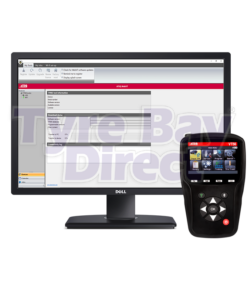
Car manufacturers launch new vehicle models, facelifts, and electronic control unit updates constantly. To keep your diagnostics equipment operating without a hitch, keeping your software current is crucial.
We offer annual data update subscriptions and TPMS updates and upgrades for Bartec diagnostic tools. These updates deliver the latest vehicle coverage, faster read speeds, and updated OBD relearn protocols. Keeping your tool up to date ensures your garage can handle brand-new registrations the moment they roll onto your forecourt.
Universal and Direct Replacement Sensors
Carrying an endless stock of car-specific replacement sensors is expensive and ties up valuable workshop cash. Universal programmable sensors solve this problem entirely.
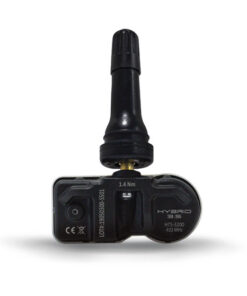
We supply dependable programmable TPMS sensors that cover the vast majority of direct TPMS-enabled cars on UK roads today. Available with either traditional black rubber snap-in valves or sleek silver aluminium clamp-in stems, these sensors clone original sensor IDs or generate brand-new IDs whenever an old unit has failed completely, pairing neatly with modern alloy wheels or chrome valves.
Stocking universal sensors means you can carry just a handful of units in your workshop and still cater to BMW, Ford, Vauxhall, Mercedes-Benz, Nissan, and Volkswagen vehicles without delay.
Service Kits and Everyday Consumables
A golden rule of tyre safety is never to reuse old valve components. Even if an electronic sensor body is working fine, the sealing elements degrade every time a tyre is demounted.
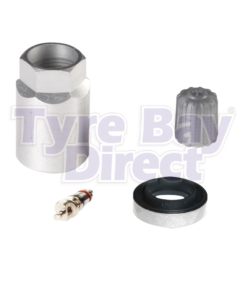
Every time a tyre bead is broken, the valve stem parts must be refreshed. For snap-in sensors, that means fitting a brand-new rubber valve body using dedicated tyre fitting tools and accessories. For clamp-in aluminium valves, it means swapping out the rubber sealing grommet, hex nut, nickel-plated valve core, and dust cap using precision automotive hand tools.
Fitting cheap brass valve cores into aluminium stems causes galvanic corrosion, fusing the parts together and destroying the sensor. We provide dedicated TPMS service kits designed to keep sensors airtight, protected from harsh road grime, and operating safely between tyre changes alongside our comprehensive range of tyre consumables.
Why Proper TPMS Maintenance Matters for Your Customers
Keeping these systems in top condition offers obvious perks for the motorist, giving your workshop plenty of clear selling points.
- MOT compliance. An illuminated TPMS fault lamp guarantees an MOT failure, making prompt sensor repair an essential fix rather than an optional upsell.
- Improved fuel economy. Under-inflated tyres create higher rolling resistance, forcing the engine to burn more fuel on every trip. Proper inflation supported by reliable garage air compressors keeps efficiency high.
- Longer tyre lifespan. Uneven or low inflation leads to rapid shoulder wear and irregular tread life, forcing drivers to buy new tyres much sooner. Pairing TPMS checks with full alignment on wheel alignment machines guarantees balanced tyre wear.
- Road safety and handling. Correct pressures ensure optimal braking distances, stable cornering, and reduced risk of high-speed blowouts, which is critical during routine vehicle maintenance.
Why Source Your TPMS Equipment from Tyre Bay Direct?
We know that workshop gear needs to be robust, dependable, and backed by people who actually understand tyre fitting. When you order your tyre pressure monitoring equipment from us, you benefit from:
- Leading brand quality. We partner directly with respected manufacturers like Bartec Auto ID to bring you proven trade equipment and garage solutions from Atlas Equipment.
- Rapid UK delivery. We keep core tools, sensors, and service parts ready on our shelves for fast delivery straight to your workshop doors, as well as essential workshop protection such as janitorial PPE.
- Technical backup. If you need advice on selecting the right programming tool or finding the correct replacement kit, our experienced team is only a phone call away.
- Great trade pricing. We price our equipment and consumables competitively to help you keep your profit margins healthy on every wheel you touch, with additional savings available across our special offers.
Explore our full range of TPMS programming tools, universal TPMS sensors, service kits, and software upgrades above, or browse our complete tyre machine packages and automotive workshop tools and equipment to keep your bays running smoothly.
Read our great
customer reviews
Great after sales service...
I had an issue with the tyre changer, rang for help, got a video call back within minutes and then received a live walk through the problem talking me through the actions required to rectify.
I also enquired about operating instructions for the balancer as I was struggling to understand some of the written ones. I then got a live training session on the video call followed up with a link to a training video in a message.
Excellent after sales service from Neal.
Great customer service and responsive...
Great customer service and responsiveness. I was dealing with a gentleman named Neal, who was very responsive to my phone calls, answered all my questions, and provided me with solutions. I would definitely recommend him to anyone and will use his excellent service in the future. Keep up the good work, guys.
Quality of service...
Anthony has now dealt with my orders on 2 occasions, very helpful and polite and noticed our previous order ... can’t recommend more he knows his equipment from the conversation had, haven’t needed to use the “help or after service” but certainly wouldn’t think twice of doing with how Anthony has dealt with anything we asked from enquiry to buying. Top class service delivery over Xmas 2019 was as agreed and the delivery driver was top class in rush hour so made him a brew minus the bacon butty as we had none left!! Give the guys a pay rise but price increase.
Thanks again look forward to purchasing from you soon. 100% service from start to end.